A good business lunch restaurant lets you talk easily, eat without fuss and finish on time. That means a room quiet enough for conversation, a location convenient for your guest, a menu with straightforward choices for different diets, and service that can work to a lunchtime schedule. Fame, novelty and a dramatic menu matter far less than whether your guest can hear you and get back to the office when they need to. Use the criteria below to compare options, then confirm the details when you book.
Key takeaways
- Prioritise conversation: noise level and table spacing matter more than anything else.
- Choose a location that is convenient for your guest, not just for you.
- Look for a clear, flexible menu that handles common dietary needs.
- Tell the restaurant it is a business lunch and how much time you have.
- Check your own organisation’s expense rules and local tax treatment before you assume a meal is claimable.
What makes a good business lunch restaurant
Think of this as a buyer’s guide to the room rather than the food. Score each candidate against these criteria.
| Criterion | What good looks like | Red flags |
|---|---|---|
| Noise | You can talk at normal volume | Loud music, hard surfaces everywhere, open kitchen right beside the table |
| Table spacing | Room to spread papers or a tablet; neighbours not within earshot | Tightly packed tables or communal benches |
| Location | Short trip for your guest; easy to find | A long journey, or somewhere hard to reach by public transport |
| Menu | Clear choices, including lighter and plant-based dishes | Only sharing plates, or a long tasting menu |
| Service pace | Can serve two courses within your time window | A kitchen that paces every meal slowly |
| Booking | Takes reservations and can note special requests | Walk-in only at busy times |
| Bill handling | Happy to bring one bill to the host discreetly | Awkward splitting or long waits to pay |
Noise, space and privacy
The best business conversations happen when nobody has to lean in. When you book, ask for a quieter table, away from the kitchen pass, the bar or the door. A corner table or a booth often helps. If the conversation is confidential, consider whether a private room, or simply a less busy time slot, is worth it.
Restaurants that suit long, social evenings are not always ideal for a working lunch. Our comparison of fine dining and casual dining explains how pace and service differ between styles; a relaxed but well-run mid-range restaurant is often the sweet spot.
Menu, diets and timing
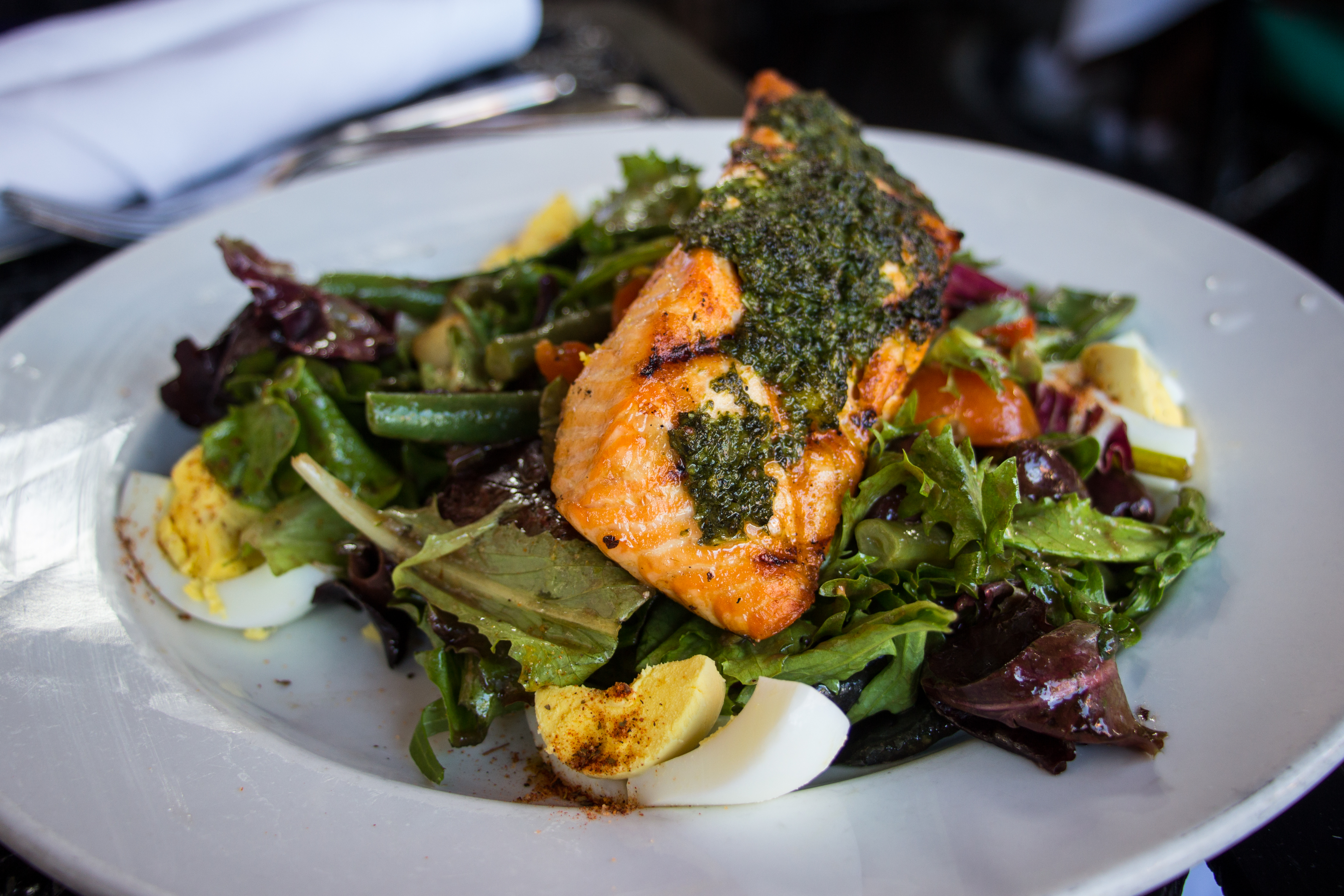
You do not know what your guest eats, so pick somewhere with an easy range: a salad, fish, meat and a substantial vegetarian or vegan option at minimum. A menu that is easy to read lets both of you order quickly and get on with the conversation.
Ask your guest about dietary needs when you send the invitation, then pass them on when you book. In the UK, the Food Standards Agency’s allergy advice for consumers explains that restaurants must provide information about the 14 major allergens in their dishes, but are not required to offer an alternative meal, so it is worth checking in advance rather than at the table.
Timing matters as much as the menu:
- Ask how long two courses usually take and mention any hard stop.
- Avoid formats that dictate the pace, such as a long set menu or a sharing menu that encourages over-ordering. Our method for ordering small plates works well for friends, less well for a first meeting.
- Ask for the bill to come to you so your guest is not left wondering whether to reach for it.
Expenses and tax: check the rules first
Who pays and how it is recorded can be sensitive, so know your position before you sit down. Rules vary by country and by employer. In the UK, HMRC’s business income manual sets out the general rule that business entertainment is not allowable as a deduction against profits, with some exceptions. In the US, the Internal Revenue Service’s Publication 463 says you can generally deduct only 50% of the unreimbursed cost of business meals and cannot deduct meals that are lavish or extravagant. If you are unsure how a lunch should be treated, ask your finance team or an accountant rather than guessing.
A quick booking checklist
- Shortlist two or three places that score well on noise, location and menu.
- Book in your name, mention it is a business lunch and ask for a quiet table.
- Pass on dietary needs and your time window.
- Confirm the day before, as covered in our restaurant reservation etiquette checklist.
- Arrive a few minutes early so you are seated when your guest arrives.
For more ideas on choosing restaurants for particular moments, browse our Occasions section.
Frequently asked questions
Who should choose the restaurant for a business lunch?
Usually the host, but it is courteous to offer your guest a choice of two places or to choose somewhere convenient for them. If they suggest somewhere, accept unless it is clearly unsuitable for a working conversation.
Is it acceptable to drink alcohol at a business lunch?
It depends on your organisation and your guest. Follow their lead, keep it modest if you do, and make it easy to choose a soft drink without comment.
Should I order the most expensive dish if the host is paying?
It is better to choose something in the middle of the menu and something easy to eat while talking. Follow the host’s cues on courses as well.
Book for the conversation
When you shortlist a business lunch restaurant, ask one question first: can we talk here, comfortably, for the time we have? If the answer is yes, and the menu suits your guest, you have a good choice. Book it, explain the purpose and let the meal support the meeting rather than compete with it.