The difference in continental vs american dining style is how you handle the fork once you have cut your food. In the American style, you cut a bite with the knife in your right hand and the fork in your left, then put the knife down and switch the fork to your right hand to eat. In the Continental style, the fork stays in your left hand, tines down, and the knife stays in your right throughout. Both are considered correct. What matters at the table is eating neatly and comfortably, not which method you use.
Key takeaways
- American style: cut, set the knife down, switch the fork to the right hand to eat.
- Continental style: fork stays in the left hand, knife in the right, throughout the meal.
- Both are correct; consistency and neatness matter more than the choice.
- The switching habit has a historical explanation tied to how forks spread.
Continental vs American dining style side by side
Wikipedia’s entry on eating utensil etiquette sets out the two approaches clearly.
| American style | Continental style | |
|---|---|---|
| Cutting | Knife in right hand, fork in left, tines down to hold the food | Same |
| Eating | Knife set down; fork moved to the right hand | Fork stays in the left hand |
| Fork grip when eating | Held much like a spoon or a pen | Handle along the palm, often called the “hidden handle” grip |
| Tines | Down while cutting; the fork is then turned in the hand to eat | Down to spear food; up for foods such as peas or rice, guided on with the knife |
| Pace | More stop-and-start, one bite at a time | Continuous cut-and-eat rhythm |
| Signalling you have finished | Utensils together at about the four o’clock position | Varies by country; utensils together on the plate is widely understood |
The same entry notes that the Continental style is not uniform across Europe, and that even table settings differ: in France the fork is traditionally laid tines down, in the UK tines up.
How the American style works
- Hold the fork in your left hand, tines down, and the knife in your right.
- Cut one bite-sized piece.
- Rest the knife on the edge of the plate.
- Move the fork to your right hand and eat the bite.
- Return the fork to your left hand, pick up the knife and repeat.
It sounds fussy written down, but it is second nature to people who grew up with it. The main etiquette point is to cut one or two pieces at a time rather than the whole plate at once.
How the Continental style works
- Hold the fork in your left hand, tines down, with the handle running along your palm and the end held between thumb and forefinger.
- Hold the knife in your right hand.
- Cut a piece and lift it to your mouth with the fork still in your left hand.
- For foods that will not stay on an upturned fork, use the knife to push them onto the back or into the curve of the fork.
The knife stays in your hand between bites, which gives the style its steady rhythm.
Where the two habits came from
The history explains the switch. Wikipedia’s history of the fork describes how the personal table fork was most likely developed in the Byzantine Empire, became common in Italy by the fourteenth century, and was not adopted in the rest of Europe until the eighteenth century. In North America it did not become popular until around the time of the American Revolution.
According to the utensil etiquette entry, before the fork, people ate with the right hand; when the fork arrived, it was held in the left for cutting and moved to the right to eat. That custom was brought to America by British colonists and became the American style, while European habits continued to evolve towards keeping the fork in the left hand.
Which should you use?
Use whichever you are comfortable with, and use it consistently. A few situations are worth a thought:
- Formal dinners abroad. Nobody expects a visitor to change a lifelong habit, but if you are curious, the Continental style is easy to practise at home.
- Business meals. Neatness matters more than style. Our guide to choosing a business lunch restaurant suggests picking dishes that are easy to eat while talking, which helps whatever method you use.
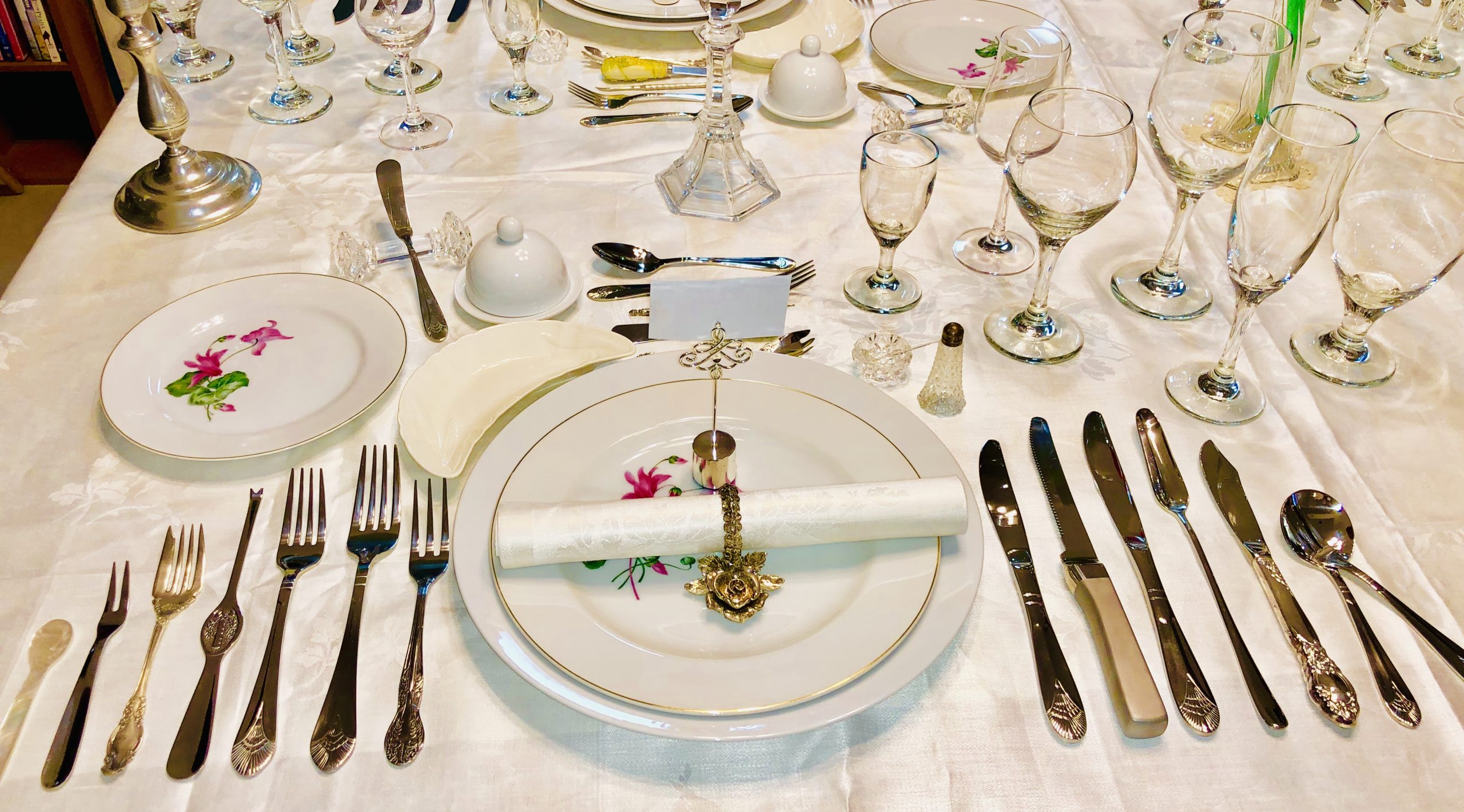
- Fine dining. Long, formal meals involve several sets of cutlery. Work from the outside in, one course at a time. Our comparison of fine dining and casual dining covers what else changes at that level.
- Travelling. Customs vary more than cutlery. Our guide to tipping etiquette abroad is a reminder to check local habits before you go.
You can find more on table manners in our etiquette guides.
Frequently asked questions
Is the Continental style more polite than the American style?
No. Both are accepted ways to eat. What reads as poor manners is clumsy or noisy eating, cutting all your food at once or waving cutlery while you talk, not the choice of style.
Should left-handed people reverse either style?
Many left-handed people find the Continental style comfortable as it is, since the fork already sits in the left hand. Otherwise, do what lets you eat neatly; hosts and staff will not mind.
How do I show I have finished eating?
Place your knife and fork together on the plate. In the American convention described by Wikipedia, they sit at about the four o’clock position, which signals that the plate can be cleared.
Practise once, then relax
If you are curious about the other style, try it at home for a week of meals. Then go back to whichever feels natural. Either way, eat neatly, keep your cutlery quiet and enjoy the conversation; that is what people notice at a table.