To set a table, put the dinner plate in the centre of each place, forks to the left of the plate, the knife immediately to the right with its blade facing the plate, and spoons to the right of the knife. Glasses go above the knife, the bread plate goes above the forks, and the napkin sits on the plate or to the left of the forks. Lay only what the meal needs and arrange cutlery in order of use, from the outside in. That one rule covers a weeknight supper, a formal dinner and the Thanksgiving table.
Key takeaways
- Forks on the left, knife and spoons on the right, glasses top right, bread plate top left.
- Knife blades always face the plate.
- Cutlery is used from the outside in, so lay it in the order the courses arrive.
- A formal setting never has more than three of any one implement on the table at once.
- For Thanksgiving, set for the courses you are actually serving, not every piece you own.
The basic place setting, step by step
Start with the basic setting. Every other version simply adds to it. The Emily Post Institute’s guide to the informal place setting describes the plate as the “hub of the wheel”: everything else is placed in relation to it.
- Plate. Put the dinner plate in the centre of the place, in front of the chair. University of Maryland Extension’s table-setting guide says the flatware, plate and napkin should sit one inch from the edge of the table.
- Fork. Lay the dinner fork to the left of the plate.
- Knife. Lay the dinner knife immediately to the right of the plate, cutting edge facing in towards the plate.
- Spoon. Put the teaspoon to the right of the knife. If you are serving soup, the soup spoon goes on the far right, outside the teaspoon.
- Glass. Stand the drinking glass at the tip of the knife, above the top right of the plate.
- Napkin. Place it on the plate or to the left of the fork. A folded napkin can also sit under the fork if space is tight.
Why this layout? Most people hold the knife in the right hand and the fork in the left, so the cutlery sits on the side of the hand that will pick it up. The blade faces inward, towards the plate, rather than out at your neighbour.
Leave enough elbow room. UMD Extension suggests a comfortable cover of 24 to 30 inches from the centre of one place to the centre of the next.
A simple diagram of where everything goes
Seen from the diner’s chair:
   [bread plate]                  [glass]
   (butter knife)

 [napkin] [fork]   ( PLATE )   [knife] [spoon]

 ------------------ table edge ------------------
And here is the same information as a reference table, including the extra pieces you add for a formal meal.
| Item | Where it goes | Notes |
|---|---|---|
| Dinner plate | Centre of the setting | About one inch from the table edge |
| Charger (service plate) | Under the dinner plate | Formal only; removed when the main course is served |
| Dinner fork | Left of the plate | Largest fork |
| Salad fork | Left of the dinner fork, or between the dinner fork and plate | Outside if salad comes first, inside if it follows the main |
| Dinner knife | Right of the plate | Blade faces the plate |
| Teaspoon and soup spoon | Right of the knife | Soup spoon on the outside |
| Water glass | Above the knife | Wine glasses to its right |
| Bread plate | Above the forks | Butter knife laid diagonally across it, handle to the right |
| Dessert fork and spoon | Horizontally above the plate | Or brought out with dessert |
| Napkin | On the plate, or left of the forks | Open edge facing the plate |
How to set a casual table
A casual table is the basic setting with a few optional extras. Emily Post’s informal guide adds:
- A starter or salad fork. It goes on the outside, to the left of the dinner fork, if the salad comes first. If the salad follows the main course, it goes inside, next to the plate.
- A bread plate. It sits above the forks, with the butter knife laid diagonally across its edge, handle on the right and blade down.
- Dessert cutlery. Lay the spoon and fork horizontally above the plate, spoon on top with its handle to the right and fork below with its handle to the left. Or simply bring them out with dessert.
One knife can serve every course at a casual meal. The Emily Post Institute notes one firm rule: a used knife should never be put back down on the table, place mat or tablecloth. Rest it on the edge of the plate instead.
How to set a formal table
A formal setting is for a meal of more than three courses. The Emily Post Institute’s guide to the formal place setting builds on the basic layout with a few firm rules:
- Three of anything, at most. No more than three of any implement goes on the table at once. The only exception is an oyster fork, which can join three other forks. Utensils for a fourth course arrive with that course.
- Forks. The dinner fork sits next to the plate. A fish fork goes to its left because it is used first. If salad comes before fish, the order from left to right is salad, fish, dinner.
- Knives. The dinner knife sits next to the plate, with a fish knife to its right. Knife blades always face the plate.
- Spoons. The soup spoon goes to the right of the knives. An oyster fork, if used, goes to the right of the spoons. It is the only fork ever placed on the right.
- Charger. A service plate sits under the early courses and is swapped for the main course plate when that course arrives.
- Glasses. Up to five, arranged in order of use above the knives and spoons. The water goblet is directly above the knives, the red or white wine glass sits just to its right, and a champagne flute or sherry glass goes further right for a first course or opening toast. Glasses for each course are cleared when the course ends.
- Napkin. On top of the charger, or to the left of the forks.
The same guide says the most formal table is strictly symmetrical: the centrepiece in the middle, an even number of candlesticks, and settings evenly spaced with the silverware at an equal distance from the edge. For how restaurant formality compares, see our guide to fine dining vs casual dining.
How to set a Thanksgiving table
Thanksgiving falls on Thursday, 26 November in 2026, and it is the meal most people set a table for with care. The Emily Post Institute’s Thanksgiving table-setting advice keeps it practical: make the table reflect what you will actually need. Most hosts do not need every possible utensil and glass.
Choose the level that matches your menu:
- Casual, one course. Everything on one plate, buffet or family style. Lay a dinner fork, knife and spoon, one glass for water and one for wine. Dessert cutlery can sit above the plate or come out with the pie.
- Informal, three courses. A starter, the main and dessert. Add a starter or salad fork on the outside left, and dessert cutlery above the plate.
- Formal, four courses or more. Use the formal rules above. Leave off cutlery for courses you are not serving, such as a fish knife and fork or an oyster fork. Champagne and sherry glasses can stay off the table until those drinks are poured.
A few Thanksgiving-specific points:
- Bread plates are optional. Emily Post notes that guests can use the edge of their dinner plate for rolls, which frees up space on a crowded table.
- Add a flute only if you are toasting. A champagne glass belongs at the setting only if you plan a champagne toast.
- Keep the centrepiece low. Both the Emily Post formal guide and university extension guidance say decorations should be low enough for people to see each other across the table.
- Plan serving space. If the turkey and sides will be passed, leave gaps for dishes between settings rather than filling every inch with décor.
Common table-setting mistakes
- Knife blade facing out. The cutting edge should always face the plate.
- Glass on the left. Glasses belong top right, above the knife. The bread plate is the item on the top left.
- Too much cutlery. Laying out every piece in the drawer confuses guests. Set only what the menu needs, and bring a fourth course’s cutlery out with that course.
- Cutlery in the wrong order. The first course’s fork or spoon should be furthest from the plate.
- A centrepiece that blocks the view. If guests have to lean to see each other, it is too tall.
Once the table is set, how people use the cutlery varies too. Our explainer on continental vs American dining style covers the two main ways of handling a knife and fork.
Frequently asked questions
Which side does the fork go on?
The left. All forks go to the left of the plate. The one exception in a formal setting is the small oyster fork, which sits to the right of the spoons.
Where does the napkin go when setting a table?
On the plate, on a charger, or to the left of the forks. A folded napkin can also go under the forks when space is tight.
Which way does the knife blade face?
Towards the plate. This rule applies at every level of formality.
Where do the dessert spoon and fork go?
Horizontally above the dinner plate, with the spoon on top, handle pointing right, and the fork below, handle pointing left. Alternatively, bring them to the table with dessert.
Where does the bread plate go?
Above the forks, on the left. The butter knife lies diagonally across it with the handle to the right.
A quick checklist before guests sit down
Walk round the table once before anyone arrives and check each place against this list:
- Plate centred, about an inch from the edge.
- Forks left, knife and spoons right, blades facing in.
- Cutlery in order of use, from the outside in.
- Glasses top right, bread plate top left.
- Napkin on the plate or left of the forks.
- Centrepiece low enough to talk over.
If every setting matches, the table is right. For more on hosting and dining manners, browse our etiquette guides.
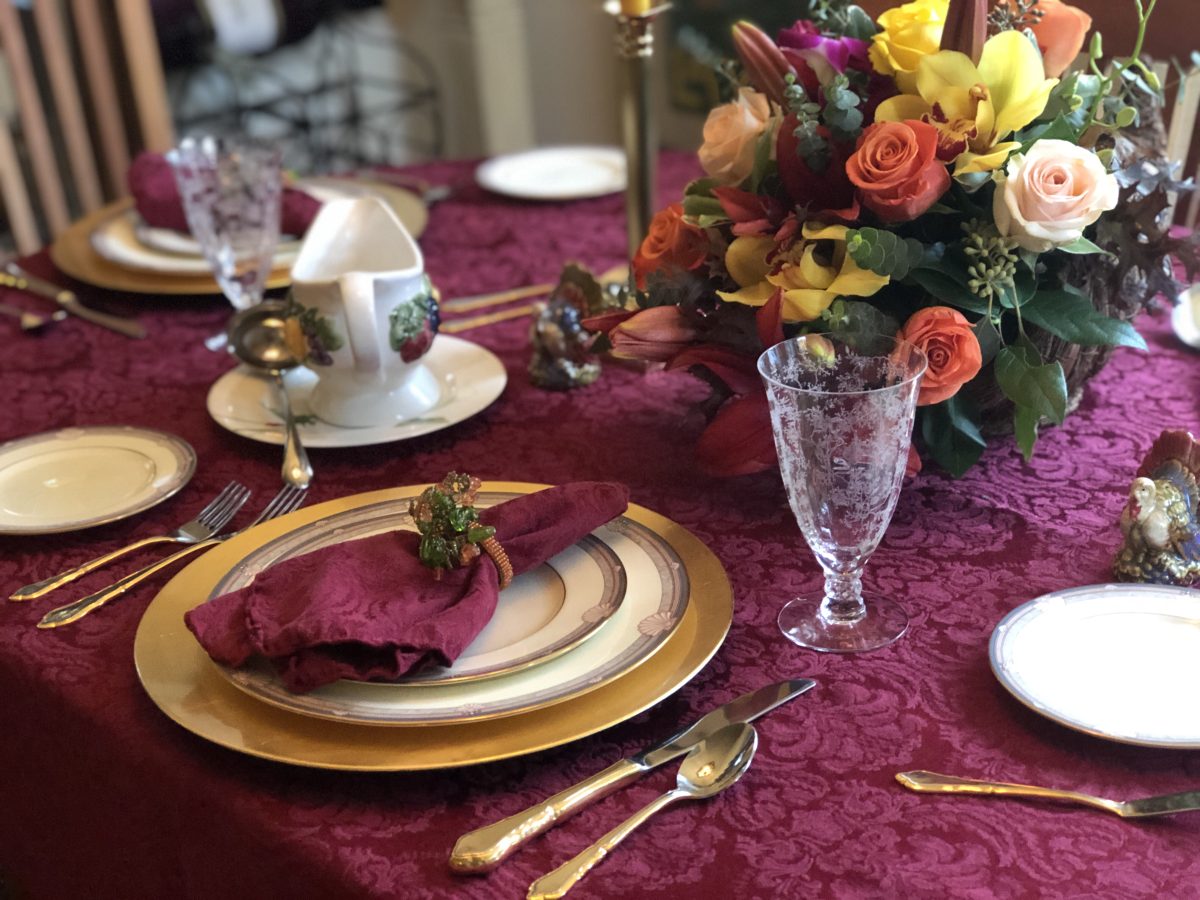
Featured photo: Thanksgiving place setting by Sarah Stierch (Missvain), CC BY 4.0.