Steak doneness levels describe how far the heat has travelled into the meat, from blue (seared outside, barely warmed inside) through rare, medium rare, medium and medium well to well done (brown all the way through). When you order, you are choosing a balance of colour, juiciness and texture: the rarer the steak, the redder, softer and juicier the centre; the more cooked, the firmer and drier. Knowing what each word means on the plate makes it far more likely you get what you want.
Here is what each level looks like, why steak can be served pink while burgers usually cannot, and how to order with confidence.
Key takeaways
- Doneness runs from blue and rare through medium to well done.
- Each step means a hotter, firmer and less pink centre.
- Whole steaks can be served pink because bacteria sit on the outside.
- Minced meat such as burgers needs cooking through at home.
- Describe the colour you want, not just the word, if you are unsure.
What steak doneness levels actually measure
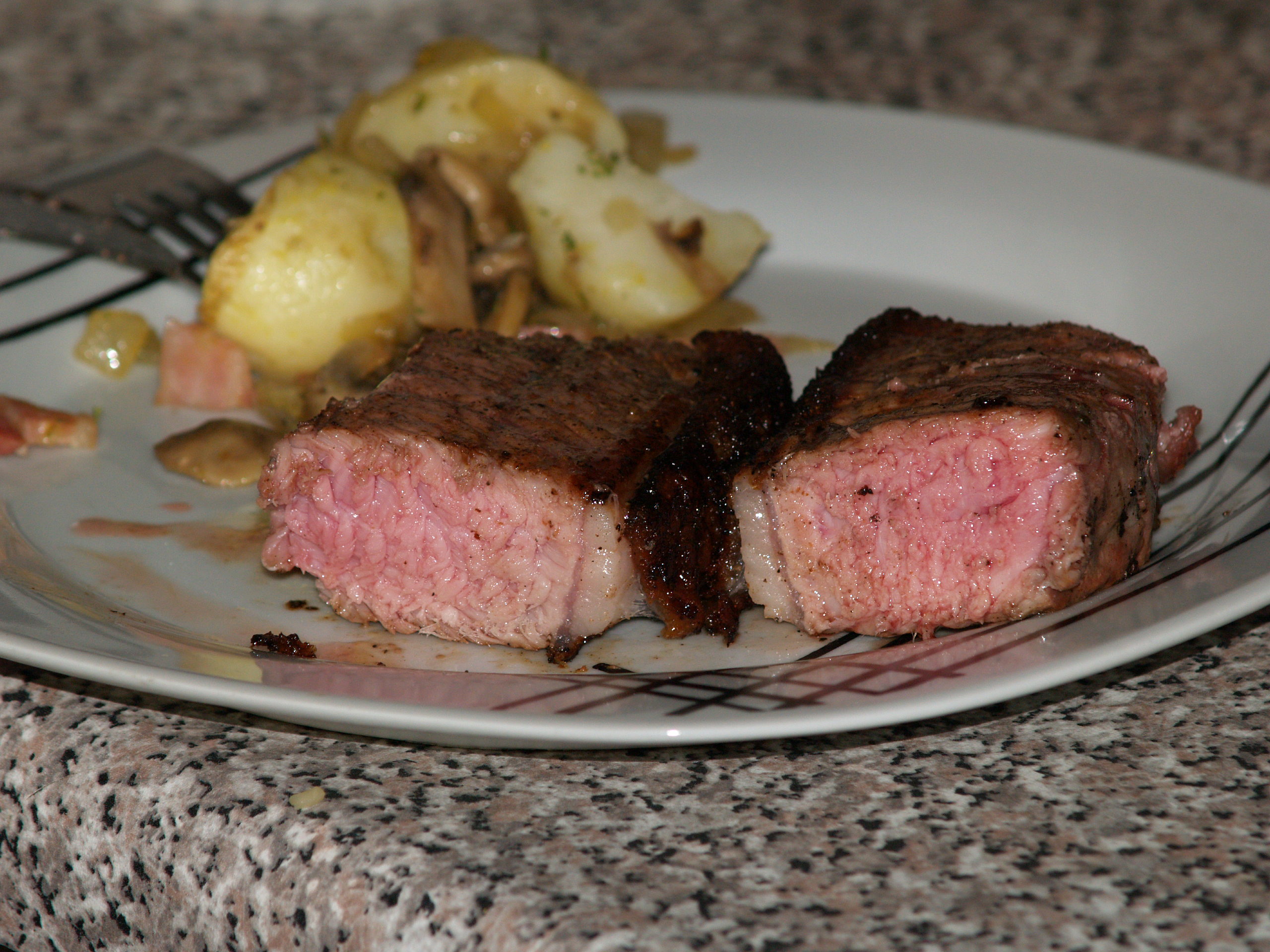
Doneness is about the internal temperature of the meat, which changes its colour and texture. As the centre warms, the red colour fades to pink and then to grey-brown, the proteins tighten and the meat releases more of its juice.
The encyclopaedia entry on doneness sets out the commonly used scale for beef, veal and lamb steaks and roasts, along with French kitchen terms and approximate core temperatures. Those numbers are a kitchen guide, not a safety standard, and individual chefs vary a little in where they draw the lines.
The same entry notes that meat keeps cooking after it leaves the heat, typically by 3 to 5°C, so kitchens take a steak off a few degrees before the target and let it rest. That is one reason a steak can arrive slightly more cooked than you expected.
The steak doneness levels, from blue to well done
| Level | French term | What you see inside | Approximate core temperature |
|---|---|---|---|
| Blue (extra rare) | Bleu | Very red, cool to warm | 46–49°C |
| Rare | Saignant | Red centre, soft | 52–55°C |
| Medium rare | À point | Warm red centre, firmer | 55–60°C |
| Medium | Demi-anglais | Pink and firm | 60–65°C |
| Medium well | Cuit | Small amount of pink in the centre | 65–69°C |
| Well done | Bien cuit | Grey-brown throughout, firm | 71°C and above |
Temperatures are those given in the doneness entry. A few practical notes on each:
- Blue is seared hard on the outside and barely cooked within. It suits very tender cuts and people who like the texture of raw beef.
- Rare keeps a deep red, soft centre. Lean cuts are often at their most tender here.
- Medium rare sits between the extremes: still red and juicy, but warm through.
- Medium gives a pink centre and a firmer bite. Fattier cuts can be pleasant at this level because more of the fat has softened.
- Medium well leaves only a trace of pink.
- Well done is cooked through. Expect a firmer, drier texture, and allow extra time.
Why steak can be pink but burgers are different
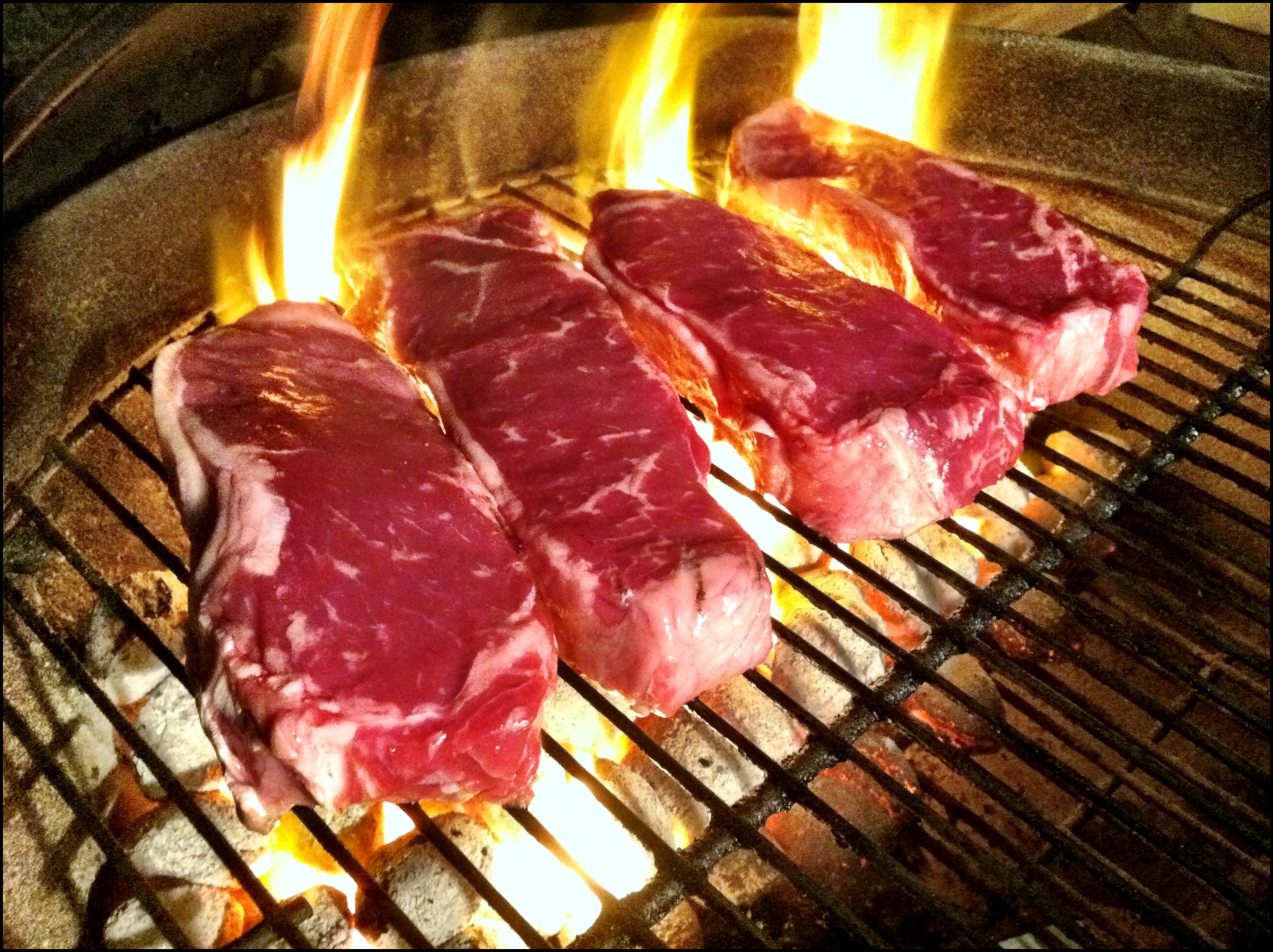
Food safety advice draws a clear line between whole cuts and minced meat. The Food Standards Agency’s guide to cooking your food explains that whole cuts such as steaks and joints (except poultry and pork) carry bacteria on the outside, so they can be served pink in the middle once the outside has been seared at a high temperature. Minced meat, burgers, sausages, kebabs and rolled joints are different and should be cooked thoroughly.
The reason, as the FSA’s page on burgers puts it, is that mincing spreads any bacteria from the surface right through the meat, so unless a burger is cooked right through, those bacteria can survive inside. The quality of the meat makes no difference to that risk. Some restaurants use strict controls that significantly reduce the risk of a burger that is pink in the middle, but the FSA still advises that children, people aged 65 or over, pregnant people and anyone with a weakened immune system should only eat burgers that are thoroughly cooked.
So if you like rare steak, there is a reason it is offered. If you are in one of the more vulnerable groups, or ordering for someone who is, ask for burgers well done and check with staff before choosing a rare steak.
How to order the steak you want
Words alone can mislead, because one kitchen’s medium rare is another’s medium. A few habits help:
- Say the level and the colour. “Medium rare, so warm and red in the middle” leaves less room for doubt.
- Ask about the cut. Thin cuts overshoot quickly; thick ones take time. Asking how a cut is usually served is one of the questions worth putting to your server.
- Check the menu wording. Some menus recommend a doneness for each cut, a detail covered in our guide on how to read a menu like a regular.
- Cut into it early. If it is wrong, say so straight away rather than halfway through.
If a steak arrives more cooked than you asked for, remember carryover heat: a steak at the top of medium rare when it left the grill can drift towards medium by the time it reaches you. A polite word to your server is usually enough.
Frequently asked questions
What is the most popular steak doneness?
There is no single answer that holds everywhere; preferences vary by person, cut and country. If you are unsure, medium rare is a sensible middle ground because it keeps the meat juicy while warming it through.
Is a well done steak a waste of a good cut?
It is a matter of taste. A well done steak will be firmer and drier, so choose a cut with more fat or ask the kitchen which cut they would recommend for that level.
Does a set menu let me choose doneness?
Usually yes. Even on a fixed menu, steak is normally cooked to order. Our comparison of prix fixe and à la carte menus explains what else you can typically adjust.
Ordering with confidence next time
Pick your level from the table, describe the colour you want, and ask how the kitchen treats the cut. If you or anyone at the table is in a vulnerable group, keep minced meat well done. For more help at the ordering stage, browse our ordering guides.