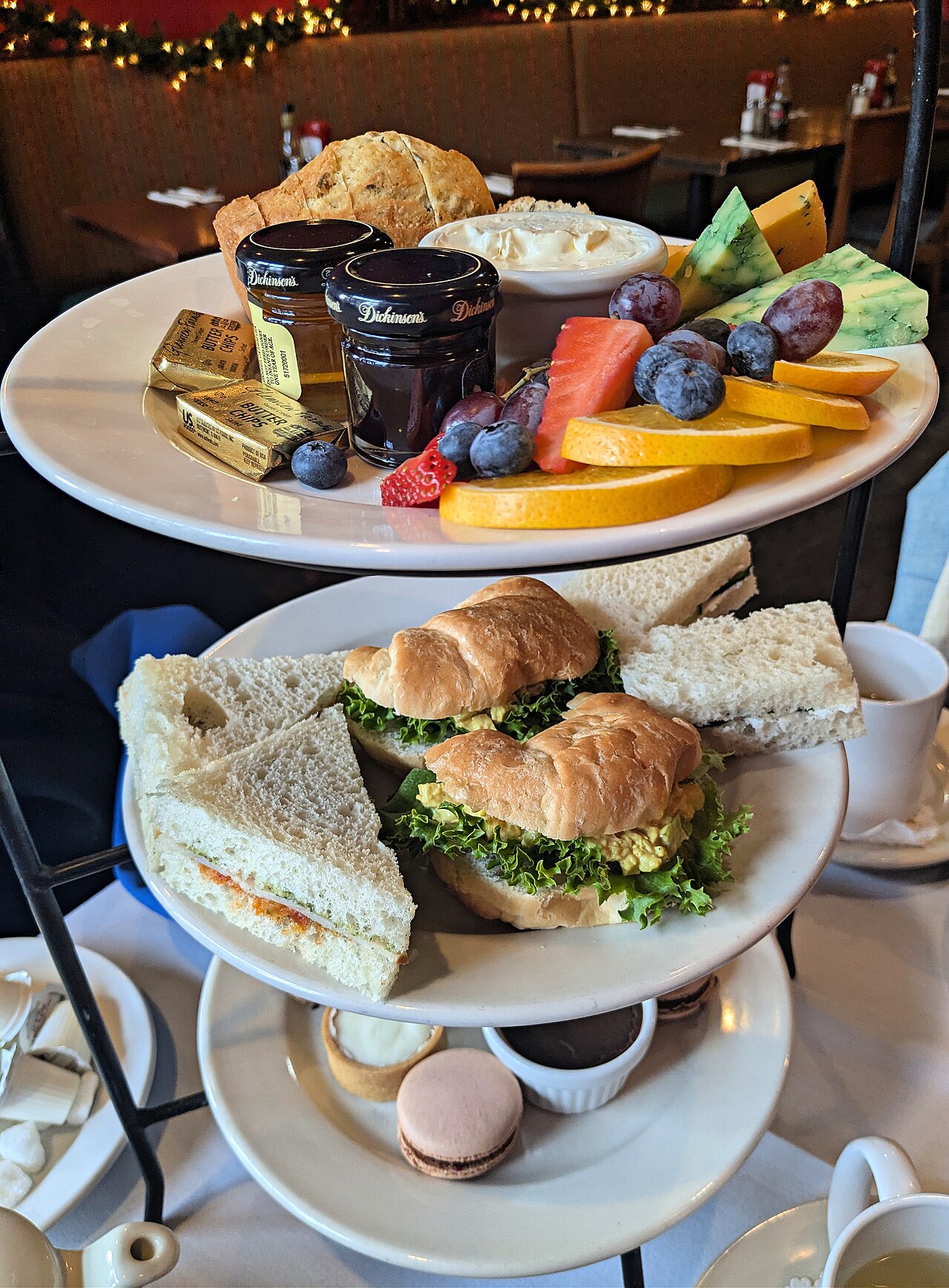
A festive afternoon tea is a seasonal version of the classic British tea: finger sandwiches, scones with clotted cream and jam, and small cakes, with Christmas flavours worked in. Etiquette is relaxed and mostly common sense: eat from the bottom tier up, split scones by hand rather than with a knife, and pace yourself. Book ahead in November and December, because festive teas sell out at popular hotels and tearooms.
Key facts
- Afternoon tea is a light meal of sandwiches, scones and cakes; traditional high tea was a heartier evening meal.
- The usual order is savoury first, then scones, then sweet: bottom tier, middle tier, top tier.
- Break scones in half by hand, then add cream and jam to each half as you eat it.
- Festive menus swap in seasonal fillings and bakes, such as turkey and cranberry sandwiches or mince pies.
- Most venues expect smart casual dress; a few grand hotels set a stricter code, so check when you book.
What is a festive afternoon tea?
It is the familiar afternoon tea menu dressed for Christmas. The structure stays the same, usually three tiers or courses, but the fillings and bakes change with the season. Sandwiches might include turkey with cranberry or smoked salmon; scones may be studded with fruit or spiced; the sweet tier often features mince pies, stollen, yule log slices, gingerbread or a mini Christmas pudding. Many venues offer a glass of fizz or a festive cocktail as an upgrade, and most can swap in an alcohol-free drink.
Where did afternoon tea come from?
According to the UK Tea & Infusions Association, Anna, the seventh Duchess of Bedford, is reputed to have started the habit in the nineteenth century, taking tea with a light snack in the late afternoon to bridge the long gap between lunch and a fashionably late dinner. The idea spread through society drawing rooms and later into hotels and tearooms. The association’s social history of tea traces how the drink became part of everyday British life.
What is the difference between high tea and afternoon tea?
The names are often mixed up. Afternoon tea is the dainty, mid-afternoon meal described here. High tea, historically, was the main evening meal of working and farming households: tea served with meat, bread and cakes after a day’s work. Some venues now use “high tea” to mean an afternoon tea with an extra savoury dish, so read the menu rather than relying on the name.
| Afternoon tea | High tea (traditional) | |
|---|---|---|
| When | Mid to late afternoon | Early evening |
| Food | Sandwiches, scones, small cakes | A hearty meal with meat, bread and cake |
| Purpose | A treat between lunch and dinner | The main meal of the day |
| Festive version | Seasonal sandwiches and Christmas bakes | Rarely offered under this name |
In what order do you eat afternoon tea?
Start with the savoury tier, usually at the bottom of the stand, then move on to the scones, and finish with the cakes and pastries at the top. If the food arrives as separate plates rather than a stand, follow the same order. Staff will often refill sandwiches or scones if you ask, so there is no need to rush.
How do you eat a scone properly?
- Break the scone in half with your hands rather than cutting it with a knife.
- Spoon a little cream and jam onto your plate first, rather than straight from the shared pots onto the scone.
- Spread one half at a time and eat it, rather than making a sandwich of the two halves.
- Cream first or jam first? In Devon tradition the cream goes on first; in Cornwall the jam does. Either is fine at the table.
What are the basic table manners for afternoon tea?
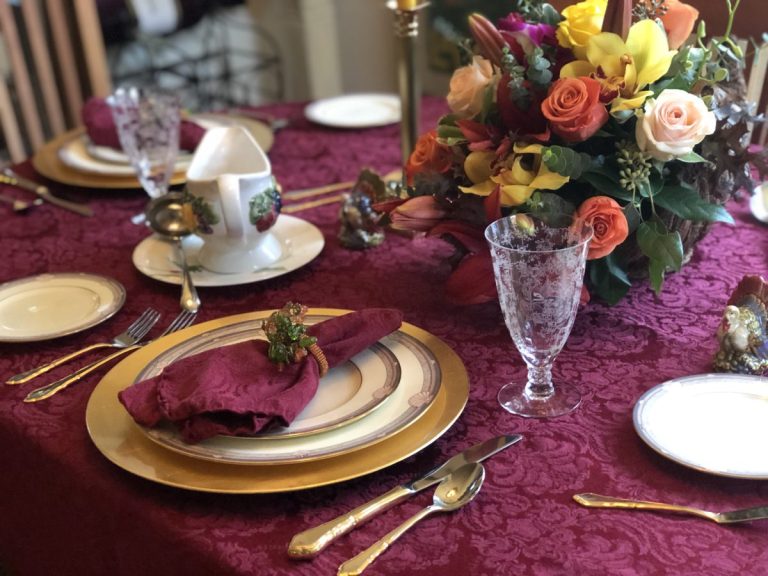
Hold the teacup by the handle, and lift the saucer only if you are standing or sitting away from the table. Stir gently without clinking the spoon against the cup, and rest the spoon on the saucer. Milk can go in before or after the tea; most people pour tea first so they can judge the strength. Napkins go on your lap. Sandwiches and cakes are finger food, though a fork is fine for anything creamy. For the basics of a formal place setting, see our guide on how to set a table.
What should you wear to afternoon tea?
Smart casual works almost everywhere: a shirt or knitwear and trousers, or a dress or skirt, with clean shoes. Some grand London hotels ask guests not to wear sportswear, trainers or shorts, and a few still ask men to wear a jacket. Festive teas are a good excuse to dress up a little. If you are unsure, check the venue’s booking page or our restaurant dress code guide.
How do you book a festive afternoon tea?
Book early, especially for weekends in December. Many venues take a card to secure the table and charge a fee for late cancellations or no-shows. When you book, mention allergies and dietary needs, because sandwiches and cakes are prepared in advance; most kitchens can do vegetarian, vegan or gluten-free versions with notice. Food businesses must be able to tell you about the 14 major allergens in their food, and the Food Standards Agency’s advice for consumers explains what to ask. If you are planning a bigger Christmas meal out, our guide to Christmas Day lunch at a restaurant covers set menus and deposits.
Frequently asked questions
What is included in a festive afternoon tea?
Usually finger sandwiches, scones with clotted cream and jam, and a selection of small cakes and pastries, with tea or coffee. Festive versions add seasonal fillings and bakes such as turkey and cranberry sandwiches, mince pies, stollen or gingerbread.
Is high tea the same as afternoon tea?
No. Afternoon tea is a light meal in the afternoon. Traditional high tea was a heartier evening meal eaten by working households, with meat, bread and cake. Some venues use the terms loosely, so check the menu.
Do you put cream or jam on a scone first?
Both are accepted. Devon tradition puts clotted cream on first, while Cornish tradition puts jam on first. Break the scone by hand and spread each half separately.
What should I wear to a festive afternoon tea?
Smart casual is right for most hotels and tearooms. Some grand hotels do not allow sportswear, trainers or shorts, and a few ask men to wear a jacket, so check the venue’s dress code when you book.
Can I get a gluten-free or vegan afternoon tea?
Many venues offer gluten-free, vegetarian or vegan versions if you ask in advance. Tell them when you book, because much of the food is prepared ahead of time.
The short version
A festive afternoon tea follows the same gentle rules as any afternoon tea: savoury first, scones next, cakes last, scones broken by hand, and plenty of time to enjoy it. Book early, flag dietary needs and dress smart casual. For more on table manners and dining customs, explore our Etiquette guides.
Featured photo: A 3-tiered afternoon tea tray by Funknendai, CC0.