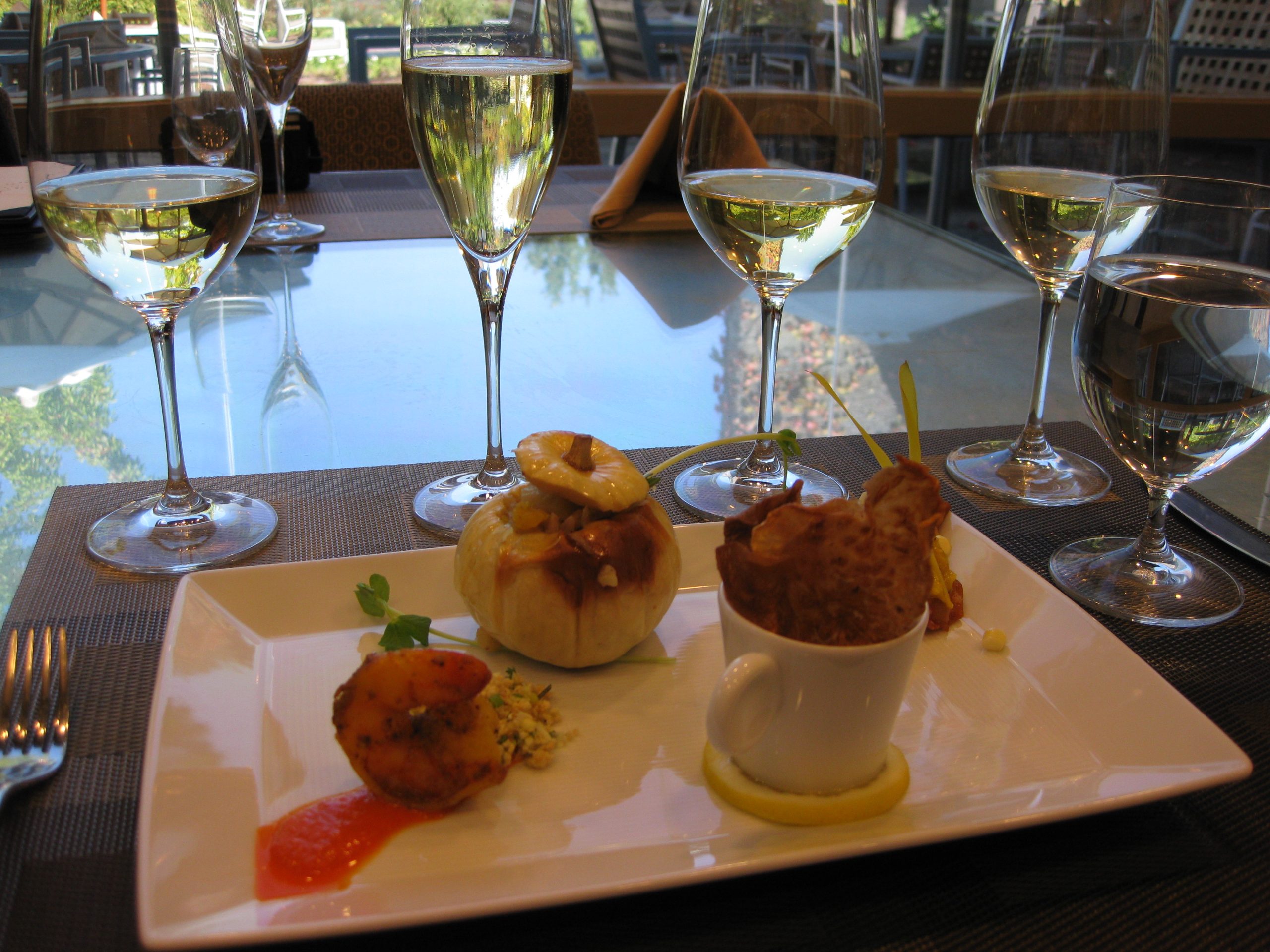
A tasting menu is a single meal made up of several small dishes, chosen by the kitchen and served one after another in a planned order. You do not pick individual starters and mains; you agree to the sequence and the chef does the rest. In French it is the menu dégustation. It suits curious eaters who enjoy being surprised and have time for a long evening, and it suits less well anyone with a short window, a small appetite for novelty or a long list of foods they avoid.
Key takeaways
- A tasting menu is a set sequence of small courses chosen by the kitchen.
- It showcases a chef’s style, a house speciality or seasonal ingredients.
- Expect a long evening and limited substitutions, so mention dietary needs when you book.
- It is right for you if you want the meal to be the event and are happy to hand over the choices.
What a tasting menu actually is
Wikipedia’s entry on the tasting menu defines it as a collection of several dishes in small portions, served by a restaurant as a single meal. Some restaurants offer it alongside an à la carte menu as an option; others serve nothing else. Either way, the menu is designed to show something specific: a cuisine, a kitchen’s signature dishes or the best of what is in season.
What separates it from simply ordering a lot of food is intention. Each course is sized and placed to lead into the next. Lighter, sharper flavours usually come early, richer ones later, then something to reset the palate before dessert. The point is the arc of the meal rather than any single plate.
Where the format comes from
The idea of serving a long run of small courses is old. The same Wikipedia entry notes that the trend traces back centuries, and that its modern, more elaborate form is often dated to the mid-1990s, when tasting menus became showcases for a chef’s craft.
Japan has its own long-established version. Kaiseki is a traditional multi-course Japanese dinner that uses fresh seasonal ingredients and pays close attention to taste, texture, appearance and colour. Its course order includes a small opening appetiser called sakizuke, a hassun course that sets the seasonal theme, sliced raw fish, grilled dishes and a seasonal dessert. If you have eaten kaiseki, you already understand how a Western tasting menu is meant to flow.

How a tasting menu evening works
Most tasting menus follow a familiar shape, even if the details vary.
| Stage | What to expect |
|---|---|
| Booking | Often required, sometimes with a set start time for the whole room |
| Before the first course | Small bites, bread or an amuse-bouche while you settle |
| Savoury courses | A run of small plates, building from light to rich |
| Palate cleanser | Something cool or sharp before the sweet courses |
| Dessert | One or more sweet courses, sometimes with small extras |
| Drinks | Your own choice from the list, or a suggested pairing for each course |
Because the kitchen plans the whole sequence, the pace is theirs. That is relaxing if you like it and frustrating if you were hoping to be out by nine. Our comparison of fine dining and casual dining covers how this kind of pacing differs from an ordinary meal out.
Is it right for you? A quick self-check
A tasting menu is usually a good fit if:
- You enjoy trying things you would not normally order.
- The meal is the main event of the evening, not a prelude to something else.
- You are comfortable letting someone else make the choices.
- Your dining companions feel the same way, because many restaurants serve the tasting menu to the whole table.
It may not be the best choice if:
- You have several food allergies or strong dislikes, since substitutions can be limited.
- You need to leave at a fixed time.
- You prefer one generous plate to many small ones.
If you are unsure, read the menu online first. Our guide on how to read a menu helps you spot what a kitchen does best before you commit.
Dietary needs and booking
Tell the restaurant about allergies and intolerances when you book, not when you sit down. A tasting menu is prepared in a set order, often for a full room at once, so the kitchen needs notice to adapt. In the UK, the Food Standards Agency points out that restaurants must provide allergen information but are not required to offer you an alternative meal, which makes an early conversation even more important. The steps in our restaurant reservation etiquette checklist cover what to mention when you book.
For more on the different kinds of restaurants and how they work, see our restaurant types section.
Frequently asked questions
How many courses are in a tasting menu?
There is no standard number. Some restaurants serve a handful of courses; at the extreme, a few well-known kitchens have offered menus of 40 or more. The menu or booking page normally tells you what to expect.
Can I change dishes on a tasting menu?
Sometimes, within limits. Many kitchens can adapt for allergies or dietary choices if they are told in advance, but swapping dishes simply because you prefer something else is less likely to be possible. Ask when you book.
Do I have to take the drinks pairing?
No. A pairing is an option, not a requirement. You can order from the list, choose a non-alcoholic option where offered, or ask for a recommendation by the glass for one or two courses.
Deciding before you book
Ask yourself three questions: do you want a long evening, are you happy to hand over the choices, and can the kitchen work with your dietary needs? If the answers are yes, a tasting menu can be a memorable way to see what a kitchen can do. If not, the à la carte menu at the same restaurant will often give you a taste of its style on your own terms.