Casino resort dining works best when you treat it like any other trip with a lot of choice: decide what each meal is for, then pick the type of restaurant that fits. Large resorts often gather buffets, steakhouses, all-day cafés, food courts and formal dining rooms in one building, and many are designed to keep you on site. That convenience is useful, but it is easy to drift into the nearest option at the wrong time. This guide sets out the usual choices, the questions to ask of each and a simple way to plan your meals.
Key takeaways
- Decide what each meal is for first: fuel, an event, or a quick break.
- Big resorts usually offer buffets, steakhouses, cafés, food courts and a formal dining room; each suits different moments.
- Book the meals that matter and keep the others flexible.
- Tell restaurants about allergies when you book, and pace your drinks alongside the food.
The main types of casino resort dining
Every resort is different, but most large ones mix several of the formats below. Treat this as a map rather than a ranking.
| Type | Best for | Watch for |
|---|---|---|
| Buffet | Groups with mixed tastes, big appetites, trying many dishes | Peak-time queues; food that has been sitting out |
| Steakhouse or grill | A classic sit-down dinner with a predictable menu | Booking needed at busy times; heavy, slow meals |
| All-day café | Breakfast, late meals, something simple between plans | Long menus that do many things adequately |
| Food court or casual counters | Speed, children, quick lunches | Noise and limited seating |
| Formal or chef-led restaurant | A special-occasion dinner that is the main event | Dress codes, set menus, long evenings |
| Room service | Early starts, late arrivals, a quiet night | Limited menu, food that travels less well |
How to choose: five questions for each meal
Before you settle on a restaurant, run through these questions. They take seconds and save a lot of wandering.
- What is this meal for? Breakfast before a day out needs to be quick. A celebration dinner deserves a booking. A late snack after a show only needs to be nearby and open.
- How much time do you have? A formal restaurant or tasting-style menu can take a whole evening. If a show or event starts at a fixed time, choose something you can finish comfortably.
- Who is with you? Buffets and food courts handle mixed groups and children well. A quiet dining room suits two people who want to talk.
- Does anyone have dietary needs? This affects the choice more than anything else, as explained below.
- Do you need to book? For any meal you would be disappointed to miss, the answer is yes.
If you are new to formal menus, our guide to what a tasting menu involves will help you decide whether a chef-led restaurant suits your evening, and our comparison of fine dining and casual dining explains how pacing and service differ.

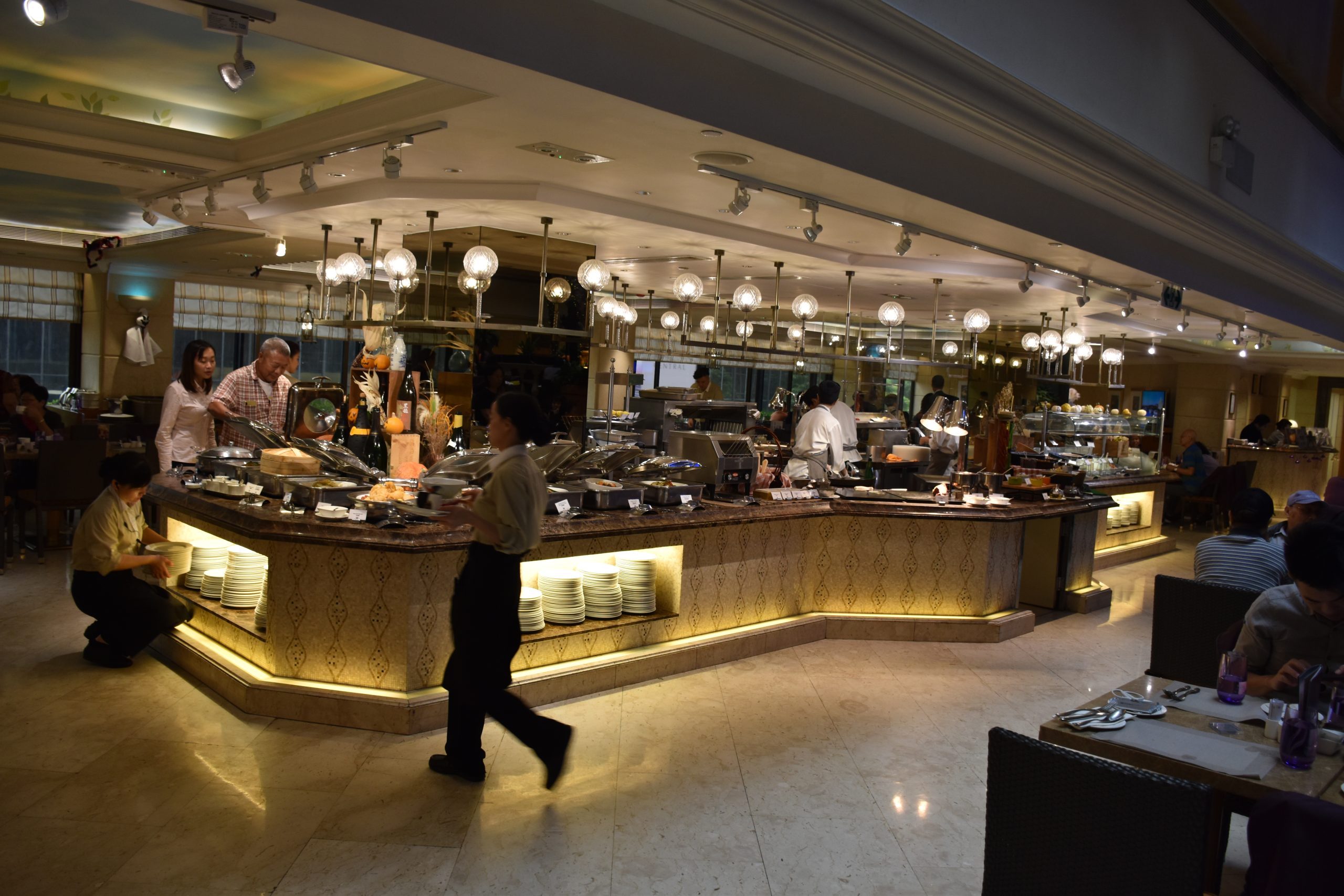
Buffets: getting the most from them
Buffets are often the default at large resorts. They suit families and groups, but a little judgement goes a long way.
- Go early in a service. Dishes are freshest when a service begins, and queues are often shorter.
- Walk the whole line first. Look at everything before you fill a plate, then go back for what appeals.
- Look for hot food that is properly hot and cold food that is properly chilled. If something looks as if it has been sitting out a long time, skip it.
- Ask staff about allergens. Labels on buffet cards can be brief. In the UK, the Food Standards Agency’s allergy advice notes that information about allergens in loose food can be given in writing or verbally, and that staff should point you to it, so ask rather than guess. Remember that shared serving spoons can move ingredients between dishes.
Pacing food and drink
Resorts are designed to keep things moving late into the night, with drinks easy to come by. Planning your meals helps you keep a steady pace. The NHS guide to alcohol units advises not drinking more than 14 units a week on a regular basis, spread over three or more days, and notes that a 175ml glass of 12% wine is about 2.1 units. Over a long weekend that adds up quickly, so eating proper meals and alternating with water or soft drinks makes sense.
A simple plan for a resort stay
You do not need a rigid schedule, but a light plan stops you defaulting to whatever is closest.
- Book one or two anchor dinners before you arrive: the meals that matter most.
- Keep breakfasts and lunches flexible and quick, using cafés, counters or the buffet.
- Check opening hours for late-night options if you will be out at a show.
- Note dress codes for any formal restaurant so you pack accordingly.
Our checklist for restaurant reservation etiquette covers how to book, confirm and cancel properly, which matters at busy resorts where tables are in demand. For more ideas on food and entertainment, browse our Leisure & Games section.
Frequently asked questions
Is the buffet the best-value way to eat at a resort?
It depends on how you eat. If your group wants variety and has big appetites, a buffet can work well. If you prefer one well-cooked dish, a sit-down restaurant may suit you better. Compare the menus rather than assuming.
Do I need to book restaurants at a large resort?
For dinners you care about, especially at weekends or around events, booking ahead is wise. Cafés, food courts and counters usually do not take bookings.
How do I manage food allergies at a resort?
Tell each restaurant when you book, repeat it when you order, and ask staff about buffet dishes rather than relying on labels. Restaurants must provide allergen information in many countries, but they may not be able to adapt every dish.
Make your meals part of the plan
The best resort meals are the ones you chose on purpose. Pick one or two dinners worth booking, keep the rest simple, check dietary needs early and pace your drinks with food. That way the dining becomes a highlight of the trip rather than something squeezed in between everything else.