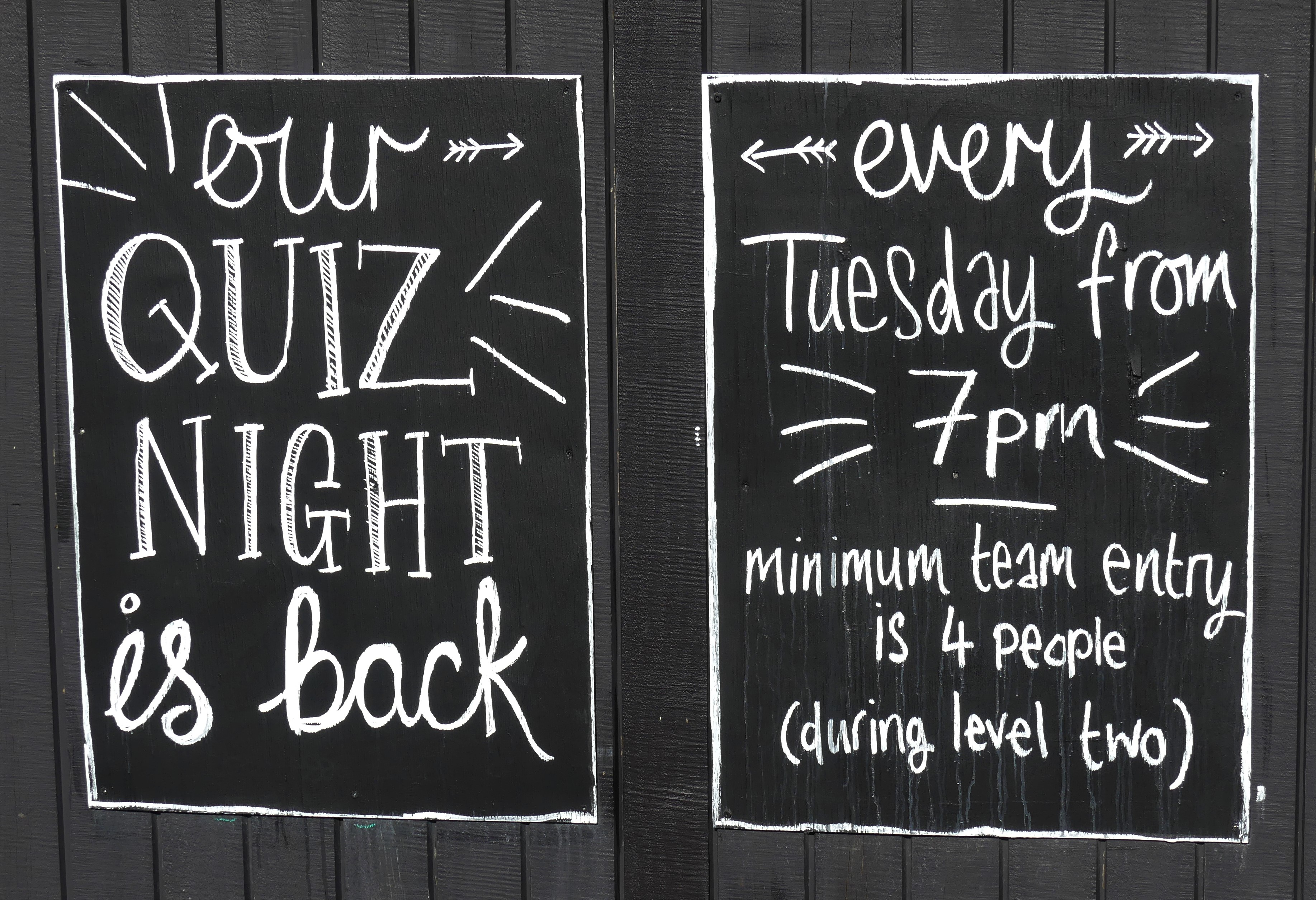
A restaurant trivia night is a hosted quiz where teams sit at their own tables, answer rounds of questions read out or handed over by a quizmaster, and eat and drink as the evening goes on. Points are added up after each round, and the team with the highest total at the end wins. You need a few friends, a table booked in good time, and a plan for when to order food so it does not land in the middle of the music round.
Below we explain how the format works, what the rounds usually look like and how to make a meal of it.
Key takeaways
- Teams of a few people answer several themed rounds set by a quizmaster.
- Answers are written on sheets, usually one point per correct answer.
- Book or arrive early; good tables go quickly on quiz nights.
- Order food before the first round or during a break.
- Shareable dishes suit a team table better than plated courses.
What is a restaurant trivia night?
The quiz night grew out of the British pub quiz. The encyclopaedia entry on pub quizzes describes it as a quiz held in a pub or bar, also called a quiz night, trivia night or bar trivia, and notes that it became part of British culture after it was popularised in the UK in the 1970s. Organised quiz leagues are recorded in north-west England from the late 1950s. The format spread to Ireland and abroad, and reached the United States in the 1990s.
Restaurants, cafés and bars with kitchens now run their own versions, usually on a quieter weeknight. The appeal on both sides is easy to see: the venue fills tables on an evening that might otherwise be slow, and guests get a reason to go out midweek with a built-in activity.
How a restaurant trivia night is run
The structure is broadly the same wherever you go.
- Teams. Groups sit around one table and choose a team name, which goes on every answer sheet. Some venues cap team size; the pub quiz entry gives a typical limit of six to ten.
- The quizmaster. A host reads questions aloud, or hands out printed papers, and usually marks the answers. Sometimes teams swap sheets and mark each other’s.
- Rounds. Expect between one and six rounds. Typical themes include general knowledge, sport, music, film and TV, picture rounds and puzzle rounds.
- Scoring. Each correct answer usually earns a point. Some quizzes give half marks for answers that are nearly right, and some offer a joker round where your points count double.
- Prizes. These vary, and are often modest: drinks, vouchers or a novelty trophy. Plenty of quizzes are free to enter.
A typical evening, round by round
| Stage | What happens | What to do about food and drink |
|---|---|---|
| Arrival | Teams find tables and collect answer sheets | Order drinks and main dishes straight away |
| Rounds one and two | Questions read aloud, answers written down | Eat while you listen; keep plates to one side of the sheet |
| Break and marking | Host marks sheets and reads scores | Order sides, refills or dessert |
| Picture or music round | Handouts or audio clips | Clear plates so you have room for handouts |
| Final rounds and results | Scores totalled, winners announced | Ask for the bill before the last round to avoid a queue |
Choosing what to order for a quiz table
Quiz nights reward food that is easy to share and easy to eat with one hand while the other holds a pen. Plated three-course dinners work less well, because courses arrive mid-question and the table is already covered in paper.
Think instead in terms of sharing plates, bowls and dishes that do not suffer from sitting for ten minutes. Our guide to ordering small plates for the table explains how to build a spread that the whole team can pick from without fuss. If you are planning a longer night out, the same pacing ideas apply as in our checklist for planning dinner and a movie: eat early enough that the main event is not interrupted.
Pacing drinks across a long quiz
A quiz can run for a couple of hours, and rounds come with natural pauses that make topping up easy. If you are drinking alcohol, keep track. The NHS guidance on alcohol units advises adults not to drink more than 14 units a week on a regular basis, and to spread drinking over three or more days. For reference, it lists a pint of lower-strength beer at 2 units and a standard 175ml glass of 12% wine at 2.1 units. Alternating with water or soft drinks is a simple way to stay sharp for the final round.
Frequently asked questions
Do I need to book for a restaurant trivia night?
Usually it helps. Quiz nights are popular and team tables fill early. Ask whether the venue takes bookings for quiz teams or works on a first-come basis, and how early you should arrive.
Can I join a quiz on my own?
Some hosts will help solo guests join a team that is short of players. Ask when you arrive. If not, sitting at the bar and playing along quietly is a pleasant way to see how it works.
Is it acceptable to look up answers on a phone?
No. Almost every quiz bans phones during rounds, and using one is the quickest way to annoy the host and the other teams. Keep it face down until the scores are read.
Making it a regular night out
If your first quiz goes well, the easiest way to improve is to come back with the same team and learn the host’s style. Book a table, order early, choose sharing dishes, and keep your phone away. For more ideas for evenings that combine food with something to do, see our leisure and games articles.